
I Married You, Not Your Entire Family Tree”- Understanding Boundaries in Marriage
- Lee Serene
- Apr 27
- 3 min read


Part 1: The Invisible Third Party
Marriage is often described as the union of two people, but in reality, many find themselves sharing a bed with their spouse’s entire lineage.
It begins at the borders... where extended family, expectations, and personal boundaries meet. The saying “I married you, not your entire family tree” often comes up not from rejection, but from accumulated emotional strain.
When a man places his parents' needs, feelings, and views above those of his partner, the "family tree" becomes a cage rather than a support system.
From a psychological perspective, marriage is not just a romantic partnership. It represents a complex relationship shaped by various factors, including upbringing, cultural expectations, attachment styles, and family roles.
Marriage as a System: When Boundaries Become Blurred
According to Family Systems Theory (Bowen), individuals do not function in isolation. Each person carries their family patterns, beliefs, and emotional habits into the marriage.
When boundaries are unclear, couples may experience:
• enmeshment (over-involvement with family members)
• triangulation (external parties affecting couple dynamics)
• role confusion (the roles of partner, child, and caregiver overlapping)
For one partner, engagement with family might seem like loyalty.
For the other, it may feel like an intrusion
The Emotional Journey of Couples
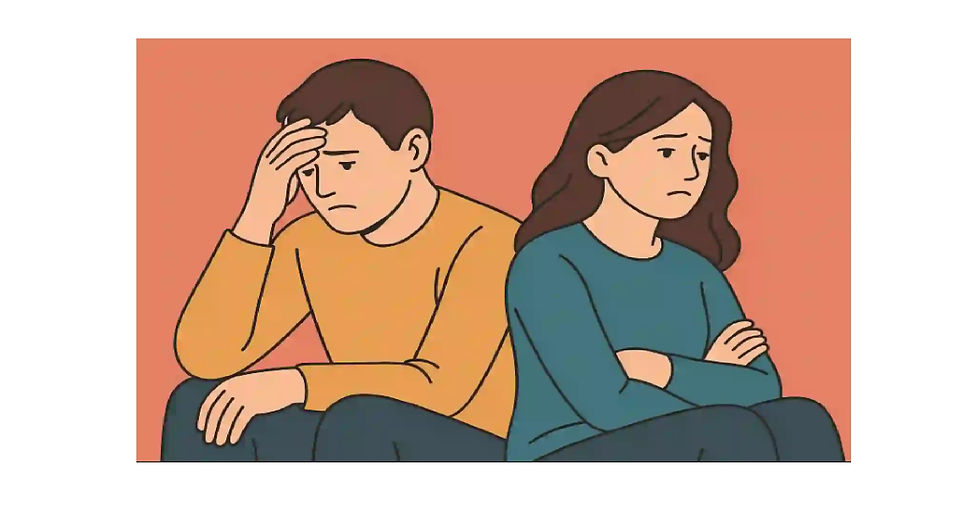
A) The Partner Feeling Overwhelmed
For the spouse, the overwhelming emotion is deep loneliness. When you find yourself consistently outvoted or overlooked in favour of your in-laws, it can make you feel like a "guest" in your own existence.
This partner may experience:
-Emotional exhaustion from repeated family-related stress: Constantly bracing for the next intrusion, leading to chronic stress and mental exhaustion.
-Emotional Resentment: A slow-burning anger that eventually kills intimacy. It is hard to feel romantic toward someone you perceive as an extension of someone else.
-The "Outsider" Syndrome: Feeling like a secondary character in your husband's life, leading to a deep sense of rejection
-Gaslighting and Confusion: The psychological toll involves a constant questioning of reality. If the husband defends his parents by saying, "They mean well" or "They're just old,"
-Decision Paralysis: Knowing that any choice made as a couple must first pass a "parental filter," stripping the couple of their autonomy
-Cognitive distortions: overgeneralisation (“Your family always causes problems”) and personalisation (“You always choose them over me”)
As time goes on, partners might refrain from being open with each other to avoid disagreements.
Cognitively: “Why does it feel like our relationship always revolves around your family?”
Emotionally: “This is not the marriage I thought I was entering.”
B) The Partner Caught in Between
This partner often goes through:
• feelings of guilt (towards family and spouse)
• the pressure to maintain harmony
• emotional conflict between different roles
Cognitively: “If I don’t support my family, I feel like I’m letting them down. But if I do, I end up upsetting my partner.”
Emotionally: “I feel as though I’m always caught between two opposing sides.”
Attachment and Emotional Safety
From an Attachment Theory perspective, a partner looks for emotional security in their marriage.
When external family dynamics repeatedly interfere with the relationship, the partner may begin to feel:
• unsafe
• unsupported
• emotionally alone
This situation can result in either:
• seeking behaviours (looking for reassurance, voicing concerns repeatedly)
• or withdrawing behaviours (disconnecting, avoiding conversations)
When It Is Not About the Family - But About the Boundary
The conflict seldom revolves around the family's existence.
It focuses on how the relationship prioritises and manages those connections.
Healthy marriages are not built by excluding family, but by establishing clear relational boundaries.
Boundaries do not mean rejection. They mean clarity.
Closing Reflection
“I chose to marry you, not your entire family tree” is not a rejection of family.
It is often a call for balance, respect, and emotional space within the marriage.
A relationship does not have to cut off outside influences.
However, it should always be a secure and prioritized environment for both individuals.
Understanding this concept enables couples to transition from conflict to conscious connection.


Comments