
When Caregiving Becomes a Source of Conflict: Insights into Couples Facing Challenges
- Lee Serene
- Apr 30
- 4 min read

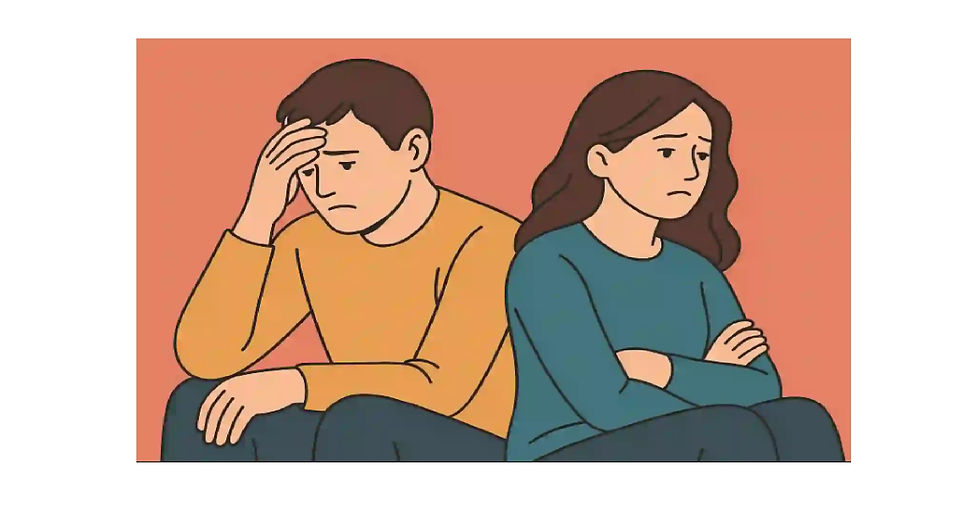
In many relationships, conflict does not arise from a single issue, but from the emotional weight surrounding it.
When one partner is supporting ageing parents with health, behavioural, or caregiving challenges, the situation often extends beyond responsibility. It becomes deeply personal...tied to identity, loyalty, and emotional history.
Conversations that used to feel neutral can slowly turn into tense, repetitive, or emotionally charged exchanges.
This represents the timeless challenge we frequently face, "Sandwich Generation" dilemma... the silent struggle of being a devoted child while also being a supportive partner.
It is a fragile balance where the "Marriage Bed" often feels crowded by the needs of the "Sickbed."
From an outsider's viewpoint, it might appear that the couple is arguing over the parents. However, from a psychological perspective, the disagreement is seldom just about the parents.
It encompasses deeper issues such as meaning, stress, identity, and emotional needs.
When caring for elderly parents becomes part of a marriage, it often brings more than logistical challenges; it brings emotional strain, differing expectations, and unspoken fears.
The Experience of a Caregiving Partner: Between Duty, Love, and Emotional Overload
For many individuals, especially in family-oriented cultures, caring for one’s parents is not merely a responsibility… it is deeply tied to one's identity, values, and emotional attachment.
For the caregiving partner, the experience is rarely just about “managing a situation.”
It may feel like:
• shouldering the burden alone (from overseeing her parents' health and actions)
• longing for support and understanding
• protecting the dignity of their parents (after all, these are their parents)
• balancing guilt, stress, and obligation (especially if they believe they are not doing enough)
• conflict of roles between being a child to their parents and a partner
Cognitively, she might reflect: “I’m not just dealing with problems… I’m trying to hold my family together.” Or “I’m already trying my best… why does this feel like I’m facing it alone?”
When her partner criticises or avoids the topic, it may not feel like a disagreement; it may feel like rejection of something deeply personal.
From a psychological perspective, this situation reflects role strain and emotional burden, where an individual struggles to meet multiple competing expectations... such as being a child, a spouse, and a caregiver. If this is not approached with care, it can trigger feelings of being unsupported or emotionally abandoned.
The Other Partner: Emotional Overload and Protective Withdrawal
For the partner who is not in the caregiving role, the same situation may result in a different emotional reaction.
He may experience:
• stress from repeated disruptions or conflicts
• a sense of helplessness (feeling unable to solve the issue)
• frustration towards situations he cannot control
• emotional exhaustion from recurring conversations
From a cognitive perspective, he may think: “This situation keeps bringing conflict into our relationship. I just want peace.” Or “Every time this topic comes up, it results in tension. It is better to avoid it.”
From a behavioural perspective, this can lead to avoidance coping — withdrawing from conversations or resisting involvement to prevent further conflict.
From a cognitive perspective, the partner may begin to associate the caregiving issue directly with conflict. Eventually, this creates a mental shortcut: “Talking about this = argument.”
The Central Dilemma: Emotional Meaning vs Practical Consequences
At the heart of this situation lies a mismatch in emotional meaning.
Parents represent more than individuals... they symbolise:
• upbringing
• identity
• family loyalty
• unresolved past experiences
When one partner speaks critically about the other’s parents, it can be perceived not just as feedback, but as:
• a personal attack
• a sign of disrespect
• or a failure to recognise emotional complexity
No perspective is incorrect. However, without understanding, both sides can feel invalidated.
Even when the concerns are valid, the way they are expressed can trigger defensiveness and emotional pain
Understanding the Reasons Behind Escalating Conversations
According to Emotionally Focused Therapy (EFT), conflicts often follow predictable patterns.
One partner looks for:
• understanding
• emotional support
• space to express
The other partner reacts with:
• defensiveness
• withdrawal
• responses that are critical or focused on the problem
This creates a negative cycle:
• one feels unheard
• the other feels overwhelmed
And as time goes on, both become more and more reactive
Unexpressed Emotional Effects
Over time, ongoing interactions can create lasting impressions:
The caregiving partner may feel:
• alone in the relationship
• protective of their parents
• hurt when their family is criticised
The caregiving partner may feel: “You don’t understand what I’m experiencing.” Or “They are still my parents… I don’t need them to be perfect; I just want them to be treated with respect.”
The other partner may feel:
• excluded from emotional closeness
• pressured into situations they find difficult
• unappreciated for their tolerance
The other partner may perceive, “This issue is the cause of all our problems.” Or “I feel like no matter what I say, it turns into something bigger.”
Mentally, both partners begin forming fixed beliefs:
• “You don’t understand me.”
• “You always react this way.”
These perceptions, although reasonable, can deepen emotional separation and reduce the ability to see each other’s intentions.
Closing Reflection
In situations like these, the disagreement is seldom about who is right or wrong.
It revolves around two individuals who are trying to cope with stress, responsibility, and emotional needs in their own ways.
Caregiving not only tests patience, but it also tests communication, empathy, and the ability to stay connected under pressure.
Before any solutions can be applied, understanding must come first.


Comments