
The Heart-Wrenching Truth About Why We Care About Your Study - So You Won't Have to Bow
- Lee Serene
- May 2
- 6 min read


Many young people experience resistance, frustration, or even rejection when it comes to studying.
From a psychological perspective, this is not simply “rebellion.”
It is often a response known as Psychological Reactance - a natural reaction that occurs when people sense that their freedom is being restricted.
When studying feels like something forced upon them by parents or society, rather than a personal choice, the mind may respond by pushing back - sometimes through disengagement or “giving up.”
The Chessboard of Life
When you sit in a classroom today, it may seem like you are simply learning content. But on a psychological level, you are engaging in something much deeper... You are shaping your future positioning in society.
This connects to the concept of Delayed Gratification, which was famously illustrated in the Marshmallow Experiment. Children who were able to delay immediate pleasure for a greater future reward tended to develop:
stronger emotional regulation
higher academic achievement
better overall life outcomes
From a psychological perspective, education is the process of building Self-Efficacy - the belief in your ability to exert control over your own life.
In simple terms, the 30 minutes you choose not to scroll or to avoid work today may lead to greater freedom and flexibility for your future self.
The Psychology of the "Power to Refuse"
Many people misunderstand education as memorising, passing exams, rankings, or obtaining certificates. But its deeper purpose is to build the power to choose your life.
According to Self-Determination Theory (Deci & Ryan), human well-being depends on three psychological needs:
Autonomy: the ability to make your own decisions
Competence: the confidence to handle challenges
Relatedness: meaningful connection with others
Engaging in studying gradually builds the internal confidence of: “I am capable of shaping where my life goes.”
Without this confidence, life often becomes reactive:
Staying in a job you dislike, but feeling unable to leave
Accepting unfair situations because there are no alternatives
Feeling stuck, not because you choose to stay, but because you cannot move
That is not true freedom. That is a form of limitation.
Engaging in study fundamentally raises the platform you stand on. The higher the height, the more opportunities you would have.
Why Studying Feels So Difficult?
If studying feels boring, frustrating, or too much to handle... that is completely normal.
You are experiencing a combination of:
Cognitive Load (the mental effort needed to understand information)
Emotional Resistance (the instinctive tendency to avoid discomfort)
The human brain is wired to prefer:
instant rewards (like social media and games)
low effort tasks
and to avoid:
deep thinking
complicated problem-solving
There is absolutely nothing "wrong" with you. However, if we constantly choose what is easy in the moment, we may later be forced to face what is difficult in reality.
The Real Gap Is Not Talent - It Is Habit
Many students often hide behind the excuse of :
“I’m not smart enough.”
“I’m not the studying type.”
However, the truth is that for most people, their level of effort is so low that "talent" is not even a consideration at this point.
The gap is not created by IQ; it is created by Deep Work and Grit.
The ability to sit for two hours while others reach for their phones after ten minutes is a habit, not an inherent ability. The research consistently indicates that the gap in outcomes is more strongly linked to habits and mindset rather than inherent intelligence. Habits can be trained.
This relates to the concept of Growth Mindset (Carol Dweck) - the belief that abilities can be developed through effort and persistence.
The real differences often come down to:
• How long can you stay focused
• Whether you are willing to think deeply
• Whether you continue after failure
These are not fixed traits. They are skills that can be trained. Sometimes, the real turning point can be quite small: Are you able to push through for just five more minutes when you feel like throwing in the towel?
That moment is not just about studying. It is about building resilience for life.
The Real Hardship Is Future Powerlessness
The challenge you are experiencing right now is clear and immediate.
But the deeper struggle comes later... when opportunities appear, but you cannot take them.
• Wanting a better job, but not meeting the requirements
• Wanting change, but lacking the ability
• Wanting to protect your loved ones, but lacking resources
This creates a quiet but persistent state known as Learned Helplessness: When a person repeatedly encounters the message that “effort doesn’t work,” they may come to think, “Nothing I do will make a difference.”
This is not loud suffering. It is a silent limitation.
Why Parents Keep Reminding You to Study
From a psychological perspective, parents often suffer from "Impact Bias" - they overestimate how much their children's current academic performance will influence their lifelong happiness. However, this comes from a place of deep empathy.
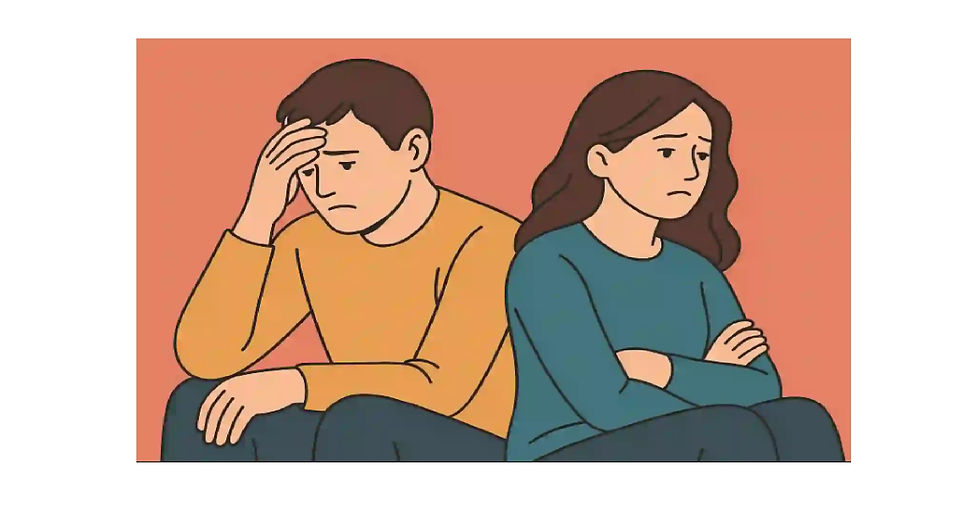
Many students experience frustration:
“Why can’t they just stop nagging?”
“Why can’t they just allow me to be happy?”
Beneath the surface of what may seem like "nagging" is often a deep, unspoken fear. In the realm of psychology, we see this as an Anxious-Attachment response.
Because they cannot control the external economy or the job market, they over-control the one variable they can influence: your study habits.
What may seem like a lack of trust is actually a Proxy for Protection. Most parents do not intend to "steal your happiness"; rather, they are trying to shield you from Future Vulnerability.
However, for most families, especially those without strong financial support, the parent is without a "buffer." From the perspective of parents, the equation is straightforward: Education = Survival.
When they notice that you are not studying, their brain triggers the same "Fight or Flight" response as if you were in physical danger. This reaction occurs because, for them, education represents one of the most reliable paths to success.
Parents are often trying to provide:
Structure: assisting you in establishing a routine
Discipline: teaching responsibility
Resilience: encouraging you to persevere through challenges
Parents often view their children as a continuation of their own legacy - “I don’t want you to struggle the way I did.”
If they felt "defeated" by life or limited by their own lack of education, they experience a form of Repetitive Compulsion. They try to "fix" their own past through your current experiences.
By imposing discipline, they are attempting to install a "psychological backbone" - the resilience and routine you will need when life gets difficult.
Their nagging is a clumsy, fear-based effort to make sure that when they are no longer around to support you, you have already established a strong enough "security line" to stand on your own. It is an imperfect delivery of a perfect love.
Five Years Later... What Will You Think?
We understand that you are feeling exhausted. We know the alarm clock can seem like an enemy and may feel overwhelming like a mountain.
However, studying is not about pleasing parents, teachers, or society. It is about slowly building the ability to rise above life's limitations.
While it may not be the only path available, for many, it stands out as one of the most reliable and accessible options. But consider this "Thought Experiment": Imagine yourself five years from now. Would you feel grateful that you kept going, even when it was difficult?
Or would you find yourself thinking: “I could have done more… but I didn't put in the effort.”
This reflects Regret Bias - people tend to regret more the things they did not try, rather than the attempts they made that didn't succeed.
Experiencing failure is painful. But the thought of "I could have" is even more painful.
A Message of Empathy
"I am just not a study person." While this may seem like a form of self-acceptance, could it actually be a way to avoid discomfort?
Let's be honest: You are not studying for your parents or your teachers. You are topping up your future account.
We suffer from Present Bias... we want that immediate dopamine rush. However, true freedom is the ability to decide your direction in the future.
If you choose not to "bend your back" and pick up the knowledge now, life will eventually force you to bow your head later. One is a choice of growth; the other is a consequence of stagnation.
The Logic: Every math problem you solve, every essay you complete, and every moment you choose to put your phone down adds a brick to the staircase you are standing on.
Higher Stairs = More Views.
Stronger Stairs = More Room to Adapt.
When you solve a challenging problem, understand a complex idea, or endure through moments of frustration… You are not just acquiring knowledge. You are building the strength to one day say: “No… this is not the life I want.”
Education is not about seeking approval from others; it is about reaching a point where you can return to your parents, teachers, and community and express your gratitude by saying, "Thank you for believing in me and not giving up on me."
Do not allow your future self to be shadowed by the individual you decided not to become today.


Comments